Mojo Drug: What It Is, Side Effects & Treatment
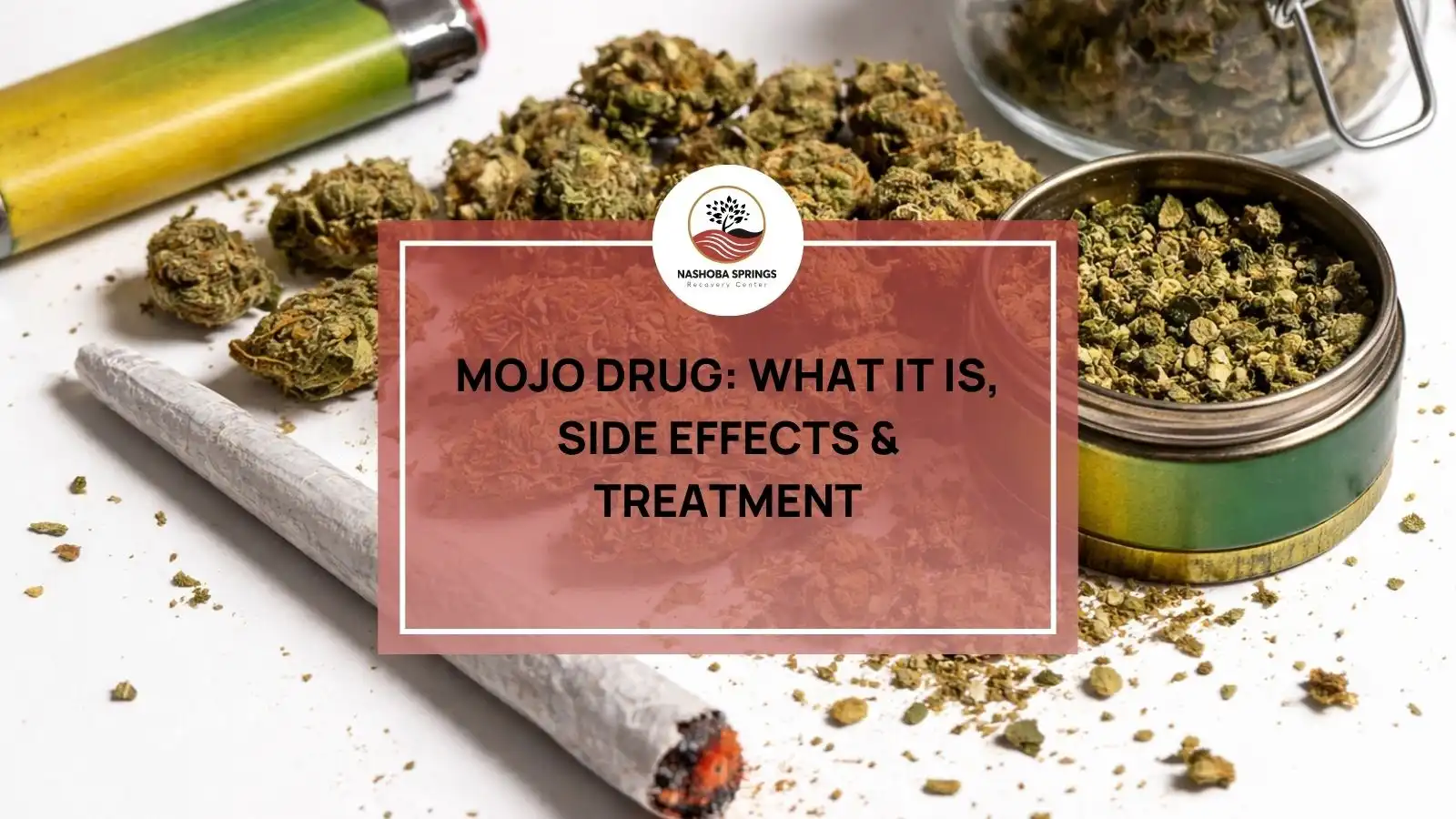
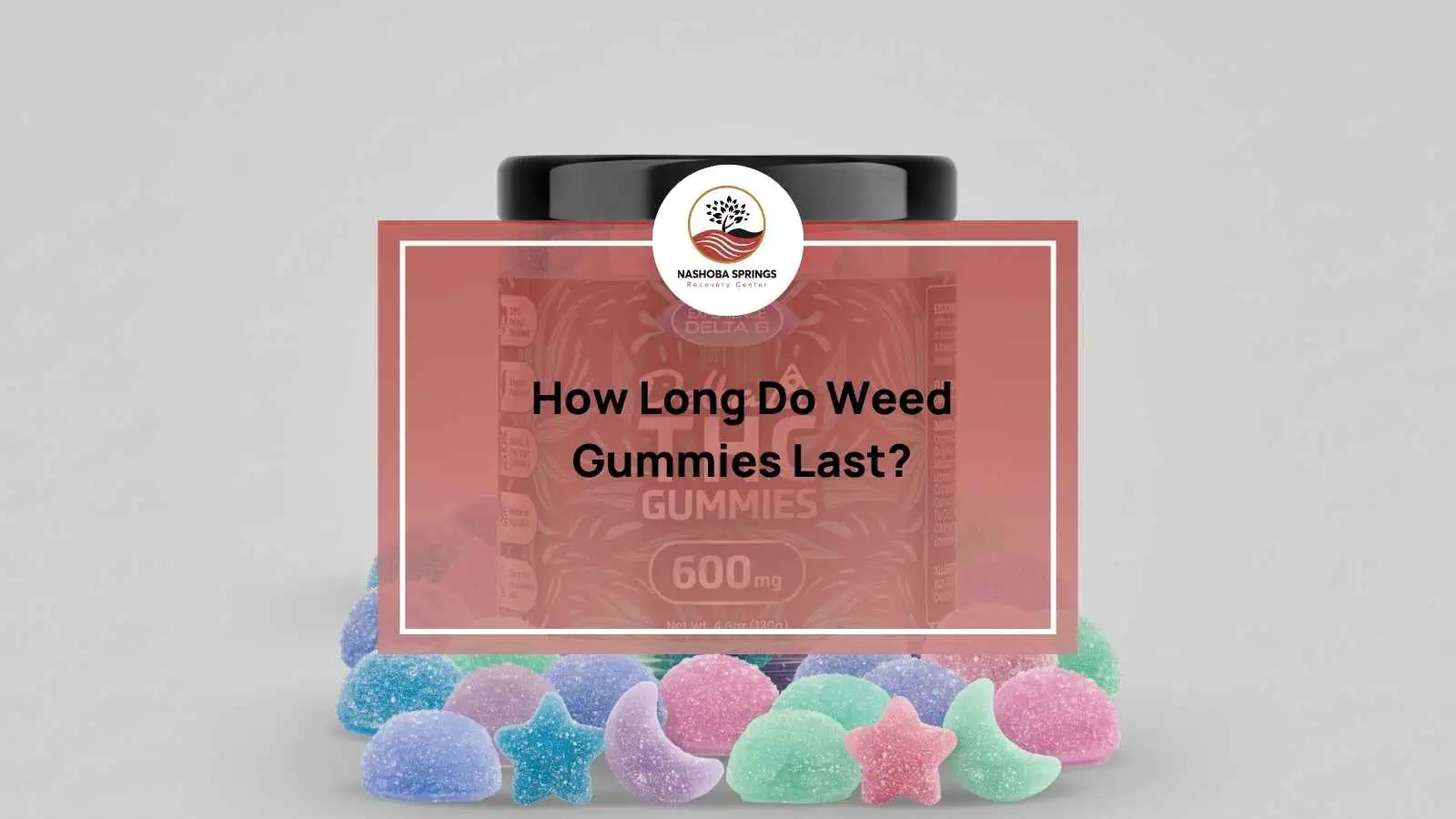
Mojo is a street name for synthetic cannabinoids, a class of lab-made chemicals sprayed onto dried plant material to mimic the effects of THC. Despite resembling marijuana in appearance, mojo is more dangerous, unpredictable, and capable of causing death after a single use. It is classified as a Schedule I controlled substance under federal law and is illegal in Massachusetts.
Key Highlights
- Mojo is up to 800 times more potent than natural THC at CB1 brain receptors.
- According to SAMHSA, emergency department visits involving synthetic cannabinoids rose 150% in a single year, from 11,406 in 2010 to 28,531 in 2011.
- The DEA identified 918 types of synthetic cannabinoids in 2024, double the 388 types seized in 2023, signaling a sharp resurgence.
- Psychosis, heart attack, and kidney failure can occur after first-time use.
- No FDA-approved antidote exists for mojo overdose.
What Is Mojo Drug?
Mojo is a synthetic cannabinoid, a human-made chemical engineered to activate the same CB1 and CB2 receptors in the brain as delta-9-tetrahydrocannabinol (THC). The drug is sprayed onto shredded plant material and smoked, or dissolved into liquid for use in vape pens.
First appearing in Europe around 2004 and reaching the United States by 2008, mojo was initially sold legally in head shops and gas stations. Manufacturers marketed it as “herbal incense” labeled “not for human consumption” to exploit regulatory gaps.
We Believe In You – No Matter What
We provide every level of care you need for lasting recovery. From detox to aftercare, our team is ready to help you start a new chapter.
What Are the Street Names for Mojo?
The most widely recognized street names include K2, Spice, Black Mamba, Scooby Snax, Cloud 9, AK-47, Mr. Nice Guy, Blaze, Ninja, Zombie, Moon Rocks, and Crazy Clown. These names change frequently as manufacturers rebrand following law enforcement crackdowns.
How Is Mojo Drug Used?
Most users smoke mojo by rolling the dried plant material into joints or packing it into pipes. Some brew it as tea or blend it into edible products. A growing trend involves dissolving synthetic cannabinoid compounds into e-liquid for use in vape pens and e-cigarettes, making the drug much harder to detect by smell or appearance and easier to use in public settings without detection.
Verify Your Insurance Coverage Today
We work with most major insurance providers to make treatment accessible. Check if your plan covers care at Nashoba Springs Recovery.






Why Do People Use Mojo Instead of Marijuana?
Several factors drive mojo drug use. Many users believe it produces a stronger or more intense high than natural cannabis. Others seek it specifically because standard urine drug tests cannot detect most synthetic cannabinoid compounds. Its low cost and historically easy availability in convenience stores and gas stations have also made it attractive to younger users and people on tight budgets.
How Is Mojo Different From Marijuana?
Mojo is different from marijuana in pharmacological form. Natural THC is a partial agonist at CB1 receptors, meaning it produces a moderate and limited activation. Synthetic cannabinoids are full agonists, flooding those same receptors with complete, unregulated intensity.
| Factor | Mojo (Synthetic Cannabinoid) | Natural Marijuana |
|---|---|---|
| Active compound | Lab-made chemicals (JWH-018, AB-FUBINACA, etc.) | THC (delta-9-tetrahydrocannabinol) |
| Receptor action | Full agonist (complete CB1/CB2 activation) | Partial agonist (limited activation) |
| Potency | Up to 800x stronger than THC | Standard potency range |
| Composition | Unknown, inconsistent batch to batch | Consistent plant-derived compounds |
| Contamination risk | May contain fentanyl, rat poison, heavy metals | Minimal contamination risk |
| Overdose deaths | Yes, documented multiple times | None recorded from toxicity alone |
| Standard drug test detection | Often evades detection | Detected on standard panels |
We Believe In You – No Matter What
We provide every level of care you need for lasting recovery. From detox to aftercare, our team is ready to help you start a new chapter.
What Are the Side Effects of Mojo?
Mojo produces severe effects that natural marijuana does not, even in very small doses. Psychosis triggered by mojo can occur after a single use and may require inpatient psychiatric care. A published case report documented a 32-year-old with no prior cardiovascular risk who suffered a heart attack within hours of smoking mojo (PubMed, Cureus, 2025).
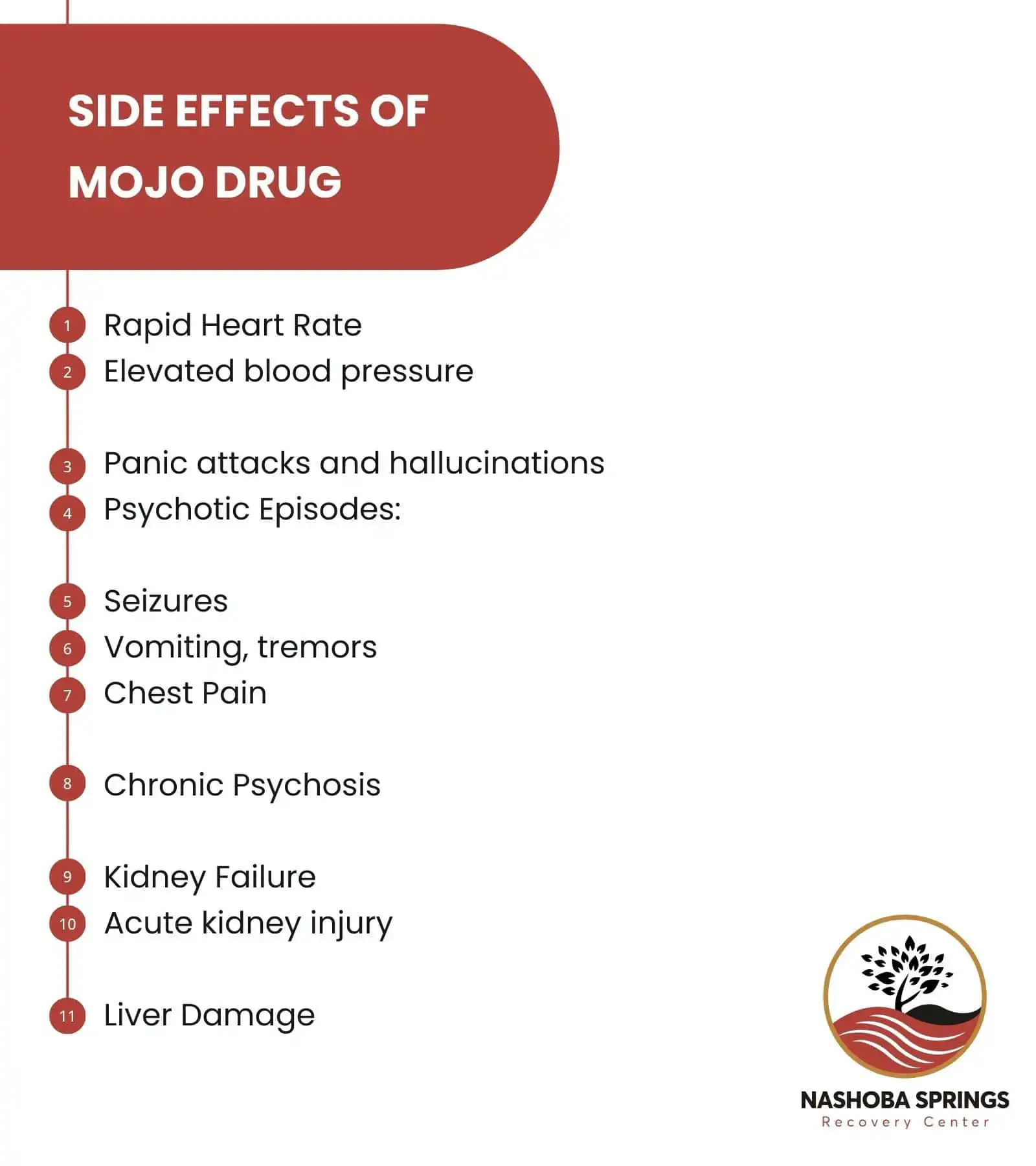
Below are some short and long-term side effects of mojo drugs:
Short-Term Side Effects
- Rapid heart rate and elevated blood pressure
- Severe anxiety, panic attacks, and paranoia
- Hallucinations and psychotic episodes
- Nausea, vomiting, tremors, and seizures
- Chest pain and respiratory distress
- Suicidal and homicidal ideation
Long-Term Side Effects
- Chronic psychosis and schizophrenia-like symptoms
- Persistent depression and cognitive impairment
- Acute kidney injury and kidney failure
- Cardiovascular damage and arrhythmias
- Liver damage and acute liver failure
- Neurological deficits and stroke
Verify Your Insurance Coverage Today
We work with most major insurance providers to make treatment accessible. Check if your plan covers care at Nashoba Springs Recovery.
What Are the Signs Someone Is Using Mojo?
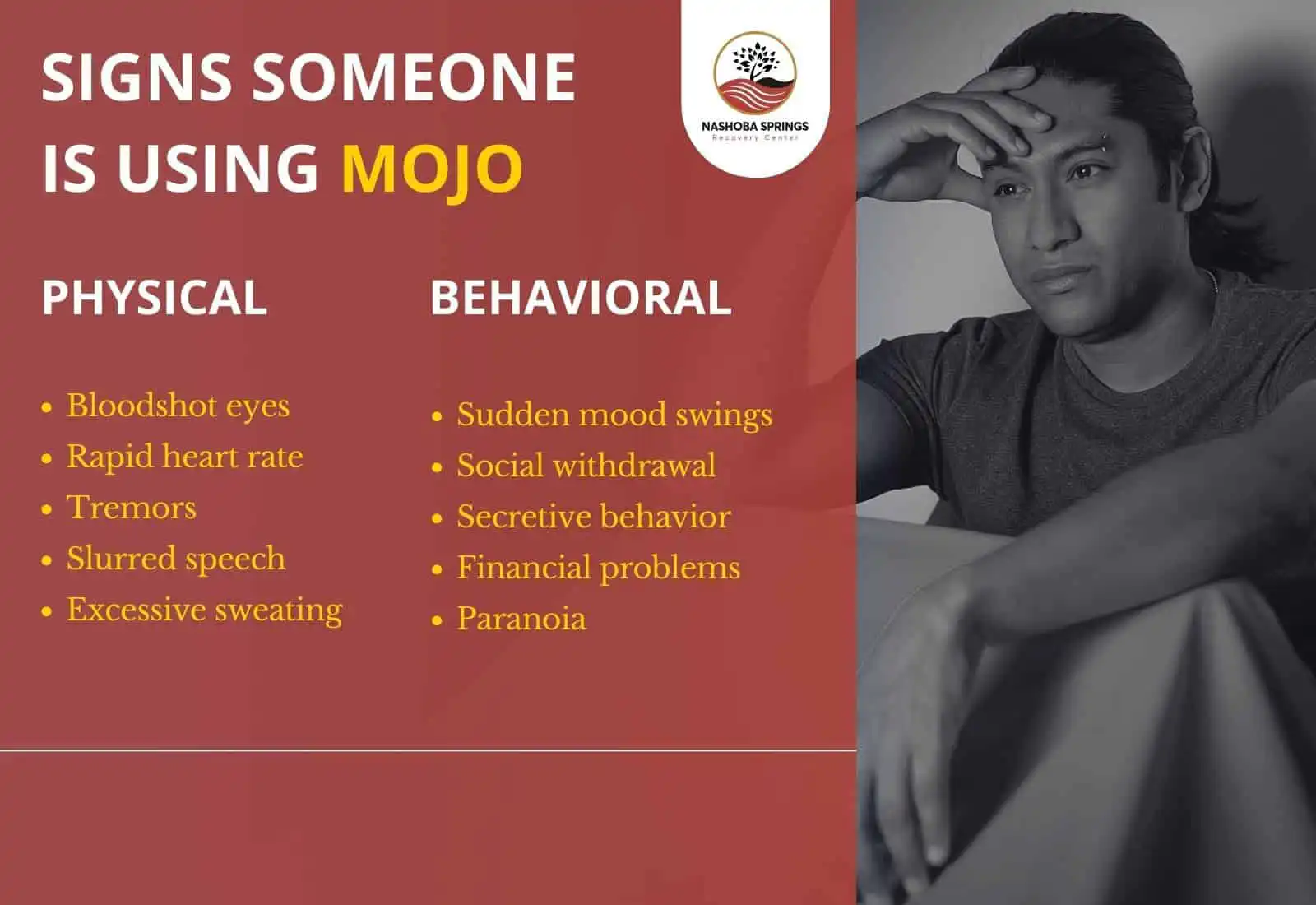
Physical signs of mojo use include bloodshot eyes, rapid heart rate, tremors, slurred speech, excessive sweating, and the distinct smell of herbal incense on clothing or in a room. Some users become completely unresponsive while remaining upright, a phenomenon documented in multiple public K2 overdose incidents.
Behavioral signs include sudden mood swings, unexplained social withdrawal, declining work or school performance, secretive behavior, and financial difficulties without clear cause. Families who notice foil herbal incense packets alongside these behavioral changes should seek a professional assessment without delay.
Can You Overdose on Mojo?
Yes, you can overdose on mojo and mojo overdoses can be fatal. A 2018 outbreak in New Haven, Connecticut caused approximately 100 overdoses within two days from a single contaminated batch. Mojo overdose symptoms include:
- Seizures
- Loss of consciousness
- Severe chest pain
- Heart attack
- Stroke
- Acute kidney failure
- Respiratory collapse
The CDC confirms no specific antidote exists. Emergency treatment relies entirely on supportive care including oxygen, intravenous fluids, and medications to manage seizures and agitation.
We Believe In You – No Matter What
We provide every level of care you need for lasting recovery. From detox to aftercare, our team is ready to help you start a new chapter.
Is Mojo Addictive?
Yes mojo is addictive. Mojo creates both physical and psychological dependence faster than natural marijuana. Because its effects wear off more quickly, users re-dose frequently, accelerating the development of tolerance and physical dependence.
Mojo withdrawal symptoms include :
- Intense cravings
- Severe anxiety
- Insomnia
- Depression
- Nausea
- Excessive sweating
- Tremors
- Headaches
- Psychosis (in severe cases)
- Seizures (in severe cases)
No FDA-approved medications exist for synthetic cannabinoid withdrawal, making medically supervised detox the safest start to recovery, while marijuana addiction treatment relies on supportive care and therapy.
What Are the Treatment Options for Mojo Addiction?
Cognitive behavioral therapy (CBT) and dialectical behavior therapy (DBT) are the primary evidence-based modalities for mojo drug addiction. Both approaches help clients identify environmental and emotional triggers, build practical coping skills, and construct a long-term relapse prevention plan grounded in their personal recovery goals.
Individuals with severe dependence, unstable living situations, or co-occurring psychiatric symptoms benefit most from a partial hospitalization program, which provides full-day clinical structure from Monday through Friday while allowing clients to return home each evening. Those with a stable recovery environment often step down into an intensive outpatient program, offering morning, afternoon, or evening scheduling options to accommodate work and family commitments.
Clients who stabilize and require continued accountability can continue care through a standard outpatient program combining weekly individual therapy and group support, with the flexibility to maintain work and personal responsibilities.
Therapeutic Modalities Used in Treatment
| Therapy Type | How It Helps in Mojo Drug Recovery |
|---|---|
| Cognitive Behavioral Therapy (CBT) | Identifies and restructures thought patterns that trigger drug use |
| Dialectical Behavior Therapy (DBT) | Builds distress tolerance and emotional regulation skills |
| Group Counseling | Provides peer support and reduces isolation during recovery |
| Individual Therapy | Addresses trauma, co-occurring disorders, and personalized recovery goals |
| Family Therapy | Repairs relationships and builds a supportive home recovery environment |
| Relapse Prevention Planning | Develops concrete strategies for managing cravings and high-risk situations |
| SMART Recovery | Provides science-based, self-management addiction recovery tools |
Verify Your Insurance Coverage Today
We work with most major insurance providers to make treatment accessible. Check if your plan covers care at Nashoba Springs Recovery.
Frequently Asked Questions About Mojo Drug
How long does mojo drug stay in your system?
Synthetic cannabinoids may appear in urine for 24 to 72 hours after a single use in most standard panels. Detection windows depend on the specific synthetic compound consumed, the frequency of use, individual metabolism, body fat percentage, and the type of test used. Specialized blood tests and hair follicle panels offer different and sometimes longer detection timeframes than standard urine screening.
Is Mojo legal in Massachusetts?
No mojo is not legal in Massachusetts. Synthetic cannabinoids are Schedule I controlled substances under federal law and are banned under Massachusetts state law. Packaging labeled “not for human consumption” does not provide legal protection. Possession, sale, and manufacture are criminal offenses that can result in federal or state felony charges regardless of how the product is labeled or marketed.
Is Mojo the same as K2 or Spice?
Yes. Mojo, K2, and Spice are all street names for synthetic cannabinoids. They share the same chemical class but may contain entirely different compounds from batch to batch, with no consistency or quality control.
Is Mojo more dangerous than marijuana?
Yes, mojo is more dangerous than marijuana. Mojo is a full agonist at CB1 receptors and has been measured at up to 800 times the potency of natural THC.
References
- Drug Enforcement Administration. (2023). Spice/K2 synthetic marijuana fact sheet. DEA
- Substance Abuse and Mental Health Services Administration. (2012). Drug abuse warning network: Emergency department visits involving synthetic cannabinoids. Rockville, MD: SAMHSA.
- National Institute on Drug Abuse. (2023). Synthetic cannabinoids (K2/Spice) DrugFacts. National Institutes of Health.
- Riederer, A. M., et al. (2016). Update: Drug-related emergency department visits involving synthetic cannabinoids. CBHSQ Report. NIH
- New York State Office of Addiction Services and Supports. (2022). Synthetic cannabinoids.