What Is Greening Out? Symptoms, Causes, and Treatment
Greening out is what happens when someone consumes too much cannabis and is overwhelmed by a sudden wave of physical and psychological symptoms. It can affect anyone, including regular marijuana users. Common signs include nausea, dizziness, a racing heart, and intense anxiety. While it is rarely life-threatening, greening out can be a frightening experience and, for some people, a warning sign that cannabis use has become a problem worth addressing.
Key Takeaways
- Greening out is rarely fatal and no deaths from THC alone have been reported. Call 911 if the person loses consciousness, has a seizure, stops breathing, or combined cannabis with other substances.
- Most episodes resolve at home with rest, hydration, and reassurance while THC clears the system.
- Symptoms from smoked or vaped cannabis ease within 1 to 3 hours, while edibles last 4 to 8 hours and can leave fatigue or brain fog for up to 24 hours.
- Severe, cyclical vomiting with a compulsive urge for hot showers points to cannabinoid hyperemesis syndrome, not greening out, and requires medical evaluation.
- Repeated episodes can signal cannabis use disorder, the most common drug use disorder in the United States, affecting an estimated 20.6 million people according to SAMHSA’s 2024 survey.
What Does Greening Out Mean?
Greening out is a colloquial term for acute cannabis overconsumption. The name comes from the pale, greenish appearance some people take on during a severe episode. It is also called a “weed overdose,” or “getting too high”. Scientifically, it occurs when THC overwhelms the brain’s endocannabinoid system, flooding CB1 receptors and triggering a cascade of physical and psychological distress.
Greening out is not the same as a fatal overdose. No confirmed human deaths from THC alone have been reported, according to NIDA. That said, the experience can be deeply traumatic, and for some people it is a turning point that signals a need for professional support.
We Believe In You – No Matter What
We provide every level of care you need for lasting recovery. From detox to aftercare, our team is ready to help you start a new chapter.
What Are the Symptoms of Greening Out?
The symptoms of greening out include physical and psychological effects that occur simultaneously, typically appearing within minutes of smoking or vaping cannabis or 30 minutes to 2 hours after consuming edibles, making the experience feel overwhelming.
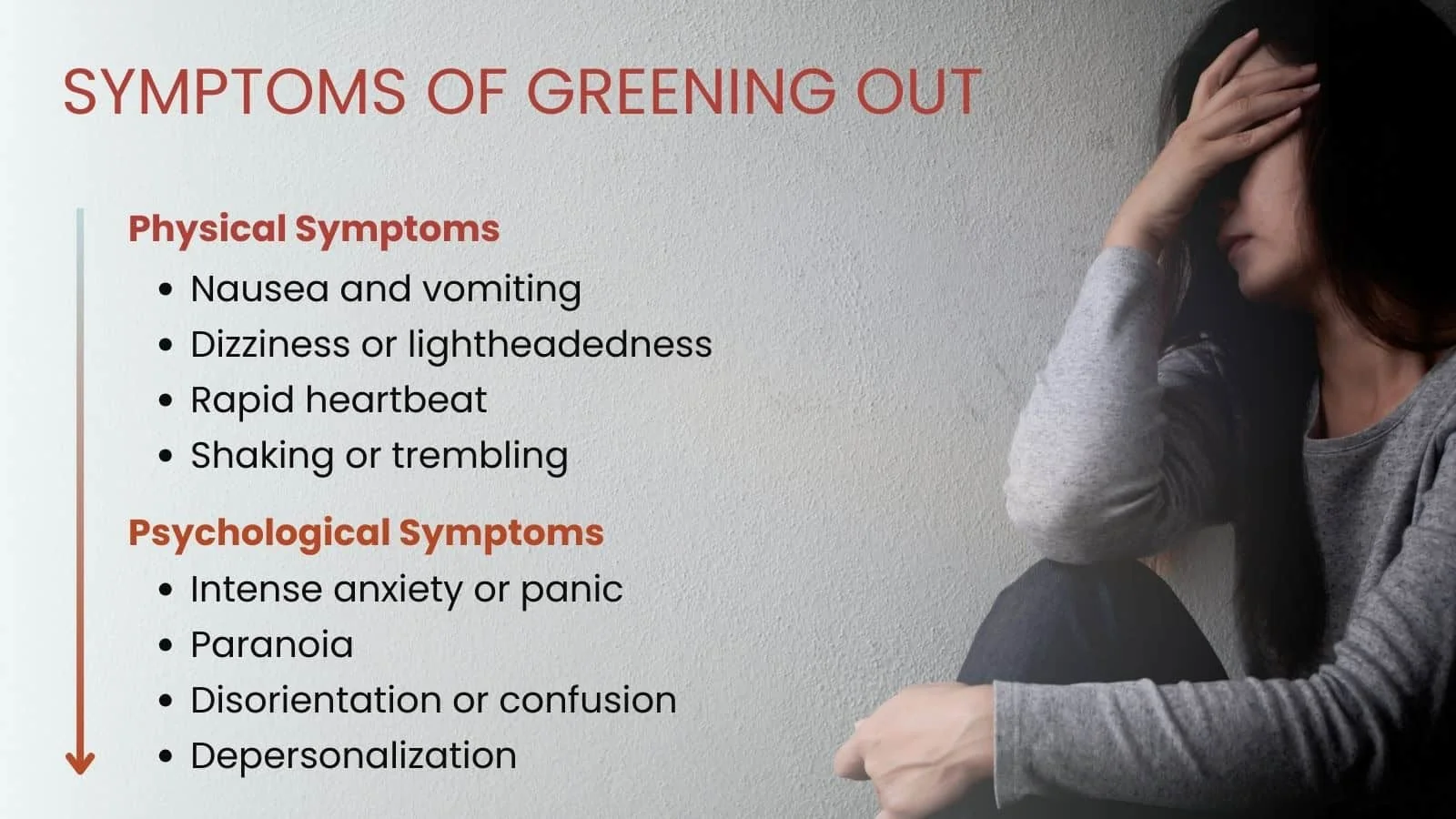
Physical Symptoms of Greening out
-
Nausea and vomiting
-
Dizziness or lightheadedness
-
Rapid heartbeat (tachycardia)
-
Pale, cold, or sweaty skin
-
Shaking or trembling
-
The spins
-
Weakness or inability to stand
-
Impaired coordination
-
Low blood pressure
-
Headache
Psychological Symptoms of Greening out
-
Intense anxiety or panic
-
Paranoia
-
Disorientation or confusion
-
Depersonalization (feeling detached from your body)
-
Derealization (feeling surroundings are not real)
-
Racing or intrusive thoughts
-
Fear of dying
-
Hallucinations (in severe cases)
-
Difficulty concentrating or speaking
-
Extreme drowsiness or brain fog
Not every person will experience all of these symptoms. In severe cases, multiple symptoms intensify at once and can escalate into a full panic attack that is difficult to distinguish from a medical emergency without clinical context.
What Causes Greening Out?
The cause of greening out is consuming more THC than the body can process at one time, with several contributing factors increasing the likelihood of exceeding this threshold.
High-Potency Products
According to NIDA, average THC concentration in cannabis has quadrupled since 1995, rising from under 4% to over 16% in tested samples. Concentrates, dabs, and wax can exceed 40% to 80% THC. Using these products without understanding their potency, particularly for someone accustomed to lower-potency flower, is one of the most direct pathways to greening out.
Edibles and Delayed Onset
Edibles are among the most common triggers because their effects are delayed by 30 minutes to 2 hours. People frequently take a second dose assuming the first did not work, only to experience both simultaneously. Edibles are also metabolized into 11-hydroxy-THC in the liver, a more potent form of THC, which means symptoms tend to be more intense and significantly longer-lasting than those from smoked cannabis.
Mixing Cannabis With Alcohol
Combining cannabis with alcohol, often called crossfading, dramatically raises greening out risk. Alcohol accelerates THC absorption into the bloodstream, intensifying effects rapidly and unpredictably. According to research consuming alcohol before cannabis can nearly double peak blood THC concentrations compared to cannabis alone. Individuals who regularly combine these substances and find that pattern difficult to break may benefit from alcohol and substance use treatment that addresses both at once.
Low Tolerance and Other Risk Factors
First-time users, people returning after a break, and anyone who uses cannabis on an empty stomach or while dehydrated face elevated risk. Pre-existing anxiety or depression can amplify psychological symptoms significantly. When mental health conditions and substance use intersect, dual diagnosis treatment offers a more complete path toward stability than addressing either issue separately.
Verify Your Insurance Coverage Today
We work with most major insurance providers to make treatment accessible. Check if your plan covers care at Nashoba Springs Recovery.








What To Do When Someone Is Greening Out?
Most greening out episodes resolve without emergency medical care. The goal is to keep the person calm, safe, and comfortable while THC clears their system naturally.
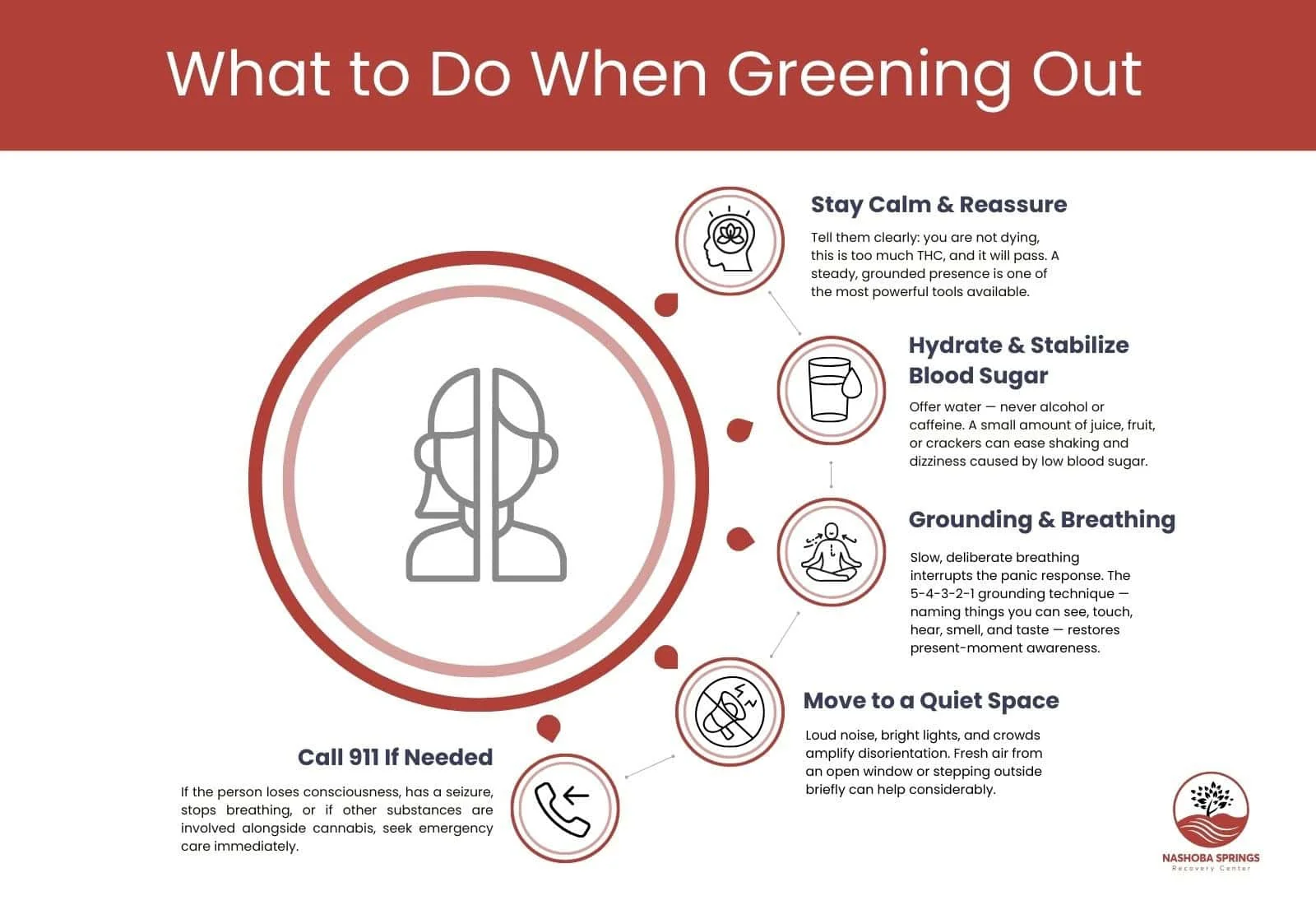
- Stay calm and reassure them. Tell the person clearly that they are not dying, that the symptoms are caused by too much THC, and that it will pass. A steady, grounded presence is one of the most effective tools available.
- Move to a quiet, low-stimulation space. Loud noise, bright lights, and crowds amplify disorientation. Fresh air from an open window or stepping outside briefly can help considerably.
- Sit or lie down safely. Keep the person seated upright if possible. If they need to lie down, position them on their side to prevent choking if they vomit.
- Offer water, not alcohol or caffeine. Staying hydrated supports recovery. Coffee and energy drinks worsen heart rate and anxiety. Never offer alcohol as a way to balance out the experience.
- Stabilize blood sugar. Shaking, weakness, and dizziness can worsen with low blood glucose. A small amount of juice, fruit, or crackers can help without overwhelming a sensitive stomach.
- Use grounding and breathing techniques. Slow, deliberate breathing can interrupt a panic response. The 5-4-3-2-1 technique, naming five things you can see, four you can touch, three you can hear, two you can smell, and one you can taste, can help restore present-moment awareness.
- Call 911 if symptoms escalate. If the person loses consciousness, has a seizure, stops breathing, shows signs of a cardiac event, or if other substances are involved alongside cannabis, seek emergency care immediately.
What Not To Do When Greening Out
- Do not leave the person alone. Anyone severely disoriented or vomiting should never be left unsupervised, even briefly.
- Do not give more cannabis or alcohol. Both intensify an already overwhelmed system and can make symptoms unpredictably worse.
- Do not dismiss or mock the experience. Telling someone to “calm down” or “stop overreacting” validates nothing and reliably escalates panic.
- Do not drive. Moving someone who is severely disoriented worsens nausea and disorientation. Stay in place unless there is a clear medical emergency.
We Believe In You – No Matter What
We provide every level of care you need for lasting recovery. From detox to aftercare, our team is ready to help you start a new chapter.
How Long Does Greening Out Last?
When cannabis is smoked or vaped, most acute symptoms begin to ease within 1 to 3 hours of peak onset. The person may feel groggy or emotionally fragile for several additional hours afterward.
When edibles are the cause, the timeline is significantly longer. Greening out from edibles commonly lasts 4 to 8 hours, with residual fatigue and brain fog sometimes persisting into the following day. In most cases, sleeping through the episode is safe and beneficial, provided the person is lying on their side if nauseous and is checked on periodically.
What Amount of Cannabis Does It Take to Green Out?
There is no fixed amount. The threshold varies based on tolerance, body weight, consumption method, and product potency. A single high-potency edible or concentrate can be enough for some people, while others require larger amounts before symptoms appear.
Can You Throw Up From Greening Out?
Yes. Nausea and vomiting are among the most common greening out symptoms. Keep the person upright or on their side, offer small sips of water, and monitor for dehydration. If vomiting is severe or does not ease within a few hours, seek medical evaluation.
Is It Good to Sleep When Greening Out?
Yes, sleep is safe and beneficial once symptoms are stabilizing. Rest helps the body metabolize THC naturally. If the person is nauseous, position them on their side before they fall asleep and check on them periodically.
Can Greening Out Last for Days?
No. Smoked or vaped cannabis typically resolves within 1 to 3 hours. Edibles can extend symptoms to 4 to 8 hours. Fatigue or brain fog may linger up to 24 hours. If severe vomiting persists beyond that, cannabinoid hyperemesis syndrome (CHS) is likely and requires medical evaluation.
Is Greening Out Dangerous?
It is rarely life-threatening on its own, but it carries real risks. Falls, choking during vomiting, and impaired decision-making can cause serious harm. Risk increases significantly when cannabis is combined with alcohol or other substances. Call 911 if the person loses consciousness, has a seizure, or stops breathing.
Greening Out vs. Cannabinoid Hyperemesis Syndrome
Greening out is sometimes confused with cannabinoid hyperemesis syndrome (CHS), a separate and more serious condition. Both involve nausea and vomiting connected to cannabis use, but they are meaningfully different in every other respect.
| Feature | Greening Out | Cannabinoid Hyperemesis Syndrome (CHS) |
|---|---|---|
| Cause | Single acute overconsumption episode | Long-term, heavy, frequent cannabis use |
| Frequency | Isolated or occasional | Recurring cycles over months or years |
| Duration | Hours | Days to weeks per cycle |
| Resolution | Resolves with rest and hydration at home | Requires cannabis abstinence; may need medical care |
| Hot bathing | Not typically reported | Strong compulsive urge for hot baths or showers |
| Treatment | Supportive care at home | Medical evaluation and sustained abstinence |
If someone regularly experiences severe, cyclical vomiting after cannabis use and finds temporary relief specifically in very hot water, CHS is a strong possibility and warrants prompt medical evaluation.
When to Consider Professional Help for Marijuana Use Disorder
A single episode is not necessarily a sign of a substance use problem. It can happen to anyone who misjudges a dose or encounters an unfamiliar product. Recurring episodes, however, deserve closer attention. SAMHSA’s 2024 National Survey on Drug Use and Health identified marijuana use disorder as the most common drug use disorder in the United States, affecting an estimated 20.6 million people.
Cannabis is frequently used as self-medication for anxiety, PTSD, or depression, but over time it often worsens the very conditions it was meant to address. When substance use and mental health are both factors, treating only one rarely produces lasting results. Our marijuana addiction treatment program provides individualized, evidence-based care that addresses both. For those who need structured support while maintaining daily responsibilities, our intensive outpatient program offers flexible scheduling without requiring a residential stay.
Verify Your Insurance Coverage Today
We work with most major insurance providers to make treatment accessible. Check if your plan covers care at Nashoba Springs Recovery.
References
- Substance Abuse and Mental Health Services Administration. (2025). Release of the 2024 National Survey on Drug Use and Health: Leveraging the latest substance use and mental health data to make America healthy again. >
- National Institute on Drug Abuse. (n.d.). Cannabis potency data. National Institutes of Health. >
- Roehler, D. R., Smith, H., IV, Radhakrishnan, L., Holland, K. M., Gates, A. L., Vivolo-Kantor, A. M., & Hoots, B. E. (2023). Cannabis-involved emergency department visits among persons aged less than 25 years before and during the COVID-19 pandemic, United States, 2019-2022. Morbidity and Mortality Weekly Report, 72(28), 758-765. >
- National Institute on Drug Abuse. (n.d.). Cannabis (marijuana) DrugFacts. National Institutes of Health. >