Benefits of Quitting Weed: Timeline for Brain & Sleep
The benefits of quitting weed include clearer thinking within days, easier breathing, relief from cannabis-related vomiting, and recovery of brain cannabinoid receptors within about four weeks. Short-term withdrawal usually comes first. It starts within 24 to 48 hours and peaks between days 2 and 6.
The size and speed of each benefit depend on how often, how long, and how potent past use was. Heavy daily use produces stronger withdrawal and a longer adjustment period. Co-occurring anxiety or depression also shapes how mood changes after stopping.
Key Highlights
- The benefits of quitting weed arrive in stages. Withdrawal fades within one to three weeks, and clearer thinking, steadier sleep, and easier breathing follow.
- Chronic THC use reduces CB1 receptors in the brain. An NIH brain imaging study found these receptors returned to normal after about four weeks of abstinence (Hirvonen et al., 2012).
- Nearly half of regular users experience withdrawal. A meta-analysis of 23,518 participants put the rate at 47%, and the symptoms are uncomfortable but rarely medically dangerous (Bahji et al., 2020).
- Stopping cannabis is the only proven cure for cannabinoid hyperemesis syndrome, a condition that causes repeated severe vomiting.
- Heavy daily users and people with co-occurring anxiety or depression tend to adjust more slowly. They benefit most from structured clinical support.
What Happens to the Body When Someone Stops Smoking Weed?
Stopping weed removes THC from the endocannabinoid system, which helps regulate mood, sleep, appetite, memory, and stress. Regular THC exposure reduces CB1 receptor availability, so stopping triggers a short withdrawal phase followed by gradual restoration of normal signaling.
THC produces its effects by binding to cannabinoid type 1 (CB1) receptors throughout the brain. According to the Centers for Disease Control and Prevention, cannabis directly affects brain areas responsible for memory, learning, attention, decision-making, coordination, emotion, and reaction time.
Repeated THC exposure causes the brain to reduce CB1 receptors, which drives tolerance. When use stops, the brain begins rebuilding that receptor supply. This adjustment period explains why early abstinence feels uncomfortable before the benefits of quitting weed become noticeable.
We Believe In You – No Matter What
We provide every level of care you need for lasting recovery. From detox to aftercare, our team is ready to help you start a new chapter.
What Are the Main Benefits of Quitting Weed?
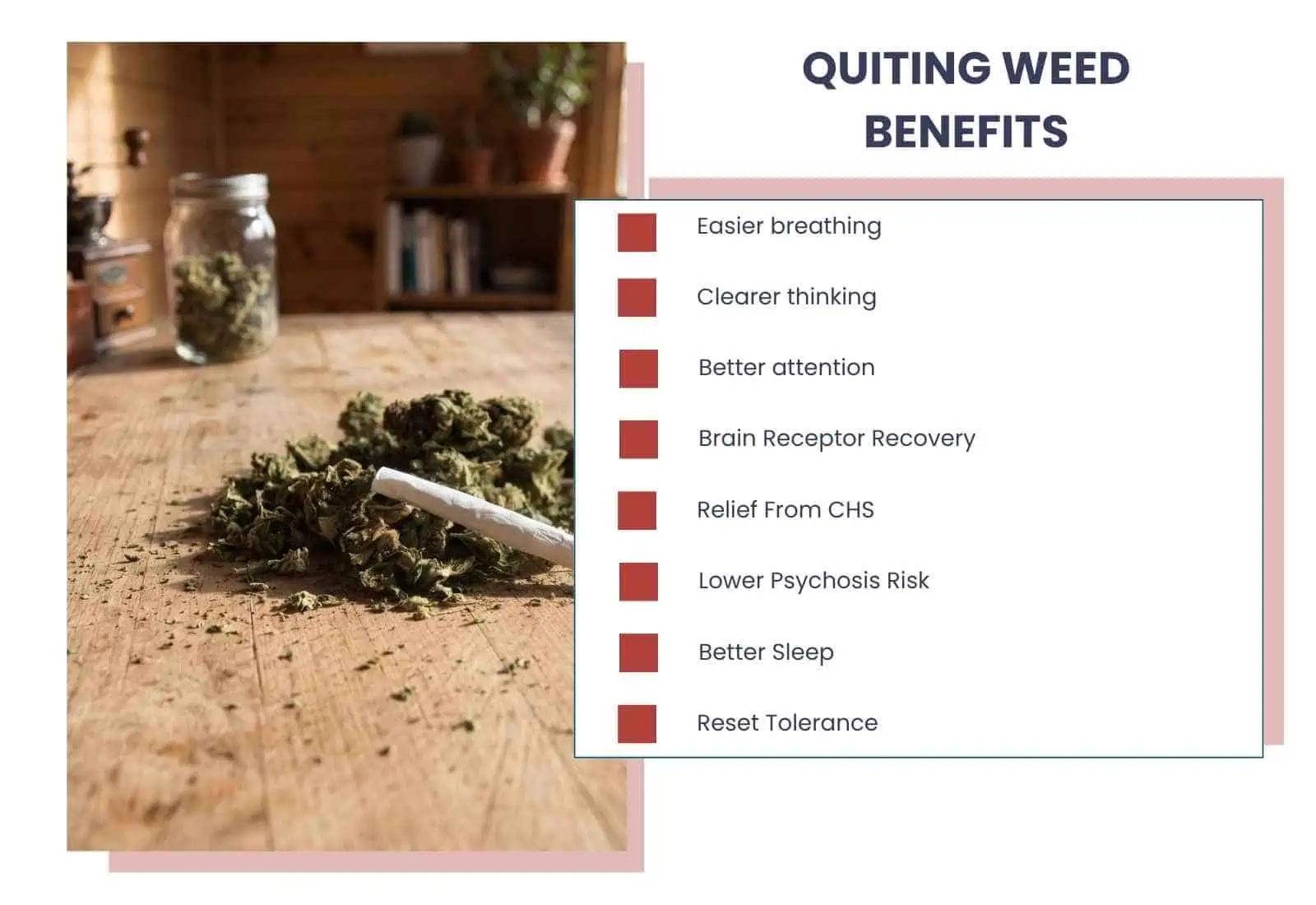
The main benefits of quitting weed are clearer thinking, restored receptor function, easier breathing, fewer cannabis-related vomiting episodes, and lower exposure to the mental health risks tied to frequent use. Most gains appear within days to weeks.
- Clearer thinking and memory: a meta-analysis of 69 studies with 2,152 adolescent and young adult cannabis users compared users with nonusers. In the 15 studies that required more than 72 hours of abstinence, the cognitive deficits were no longer significant (Scott et al., 2018).
- Better attention in people with depression: a 28-day abstinence pilot study in adults with major depressive disorder and cannabis use disorder found improved visual search speed, selective attention, and visuospatial working memory (Sorkhou et al., 2022).
- Restored brain receptor function: chronic daily cannabis smokers showed reduced cortical CB1 receptors that returned to normal after about four weeks of continuously monitored abstinence (Hirvonen et al., 2012).
- Easier breathing: frequent cannabis use is linked to morning cough, sputum, and wheeze. Quitting or reducing use lowered these symptoms toward nonuser levels (Hancox et al., 2015; Tashkin et al., 2012).
- Resolution of cannabinoid hyperemesis syndrome: stopping cannabis is the only intervention shown to completely resolve this cyclical vomiting condition. Full resolution often takes 7 to 10 days of abstinence (Lapoint et al., 2018).
- Lower exposure to psychosis risk: the CDC links long-term or frequent cannabis use to an increased risk of psychosis or schizophrenia in some users. Stopping removes an ongoing risk factor.
- Sleep without dependence on THC: sleep difficulty is a core withdrawal symptom, but it is time-limited for most people. Afterward, falling asleep no longer depends on a nightly dose (Bonnet & Preuss, 2017).
- Reset tolerance and greater control: receptor recovery reverses the tolerance that pushes regular users toward larger or more frequent doses. This lowers the risk of progressing to cannabis use disorder.
What Is the Timeline of Benefits After Quitting Weed?
The quitting weed timeline runs from withdrawal onset at 24 to 48 hours, through a symptom peak on days 2 to 6, to receptor recovery near four weeks. Respiratory and mood improvements continue over the following months.
The benefits of quitting weed timeline below reflects typical patterns in regular users. Heavy, long-term, or high-potency use can extend each phase.
| Time Since Last Use | What Typically Happens | Evidence |
|---|---|---|
| 24 to 48 hours | Withdrawal begins: irritability, anxiety, poor sleep, and reduced appetite | Connor et al., 2022 |
| 72 hours | Cognitive differences linked to recent use are no longer significant in pooled studies | Scott et al., 2018 |
| Days 2 to 6 | Withdrawal symptoms peak; craving and sleeplessness may peak as early as day 2 | Connor et al., 2022; Bonnet & Preuss, 2017 |
| Days 7 to 10 | Cannabinoid hyperemesis symptoms often resolve completely | Lapoint et al., 2018 |
| Weeks 1 to 3 | Most withdrawal symptoms fade; heavy users may have symptoms for 2 to 3 weeks or longer | Connor et al., 2022 |
| About 4 weeks | Cortical CB1 receptor density returns to normal levels | Hirvonen et al., 2012 |
| Months to years | Cough, sputum, and wheeze decline toward nonuser levels | Hancox et al., 2015 |
Verify Your Insurance Coverage Today
We work with most major insurance providers to make treatment accessible. Check if your plan covers care at Nashoba Springs Recovery.







How Does the Brain Recover After Quitting Weed?
The brain recovers by rebuilding the CB1 receptors that chronic THC use reduced. PET imaging shows cortical receptor density normalizes after about four weeks of abstinence, while the hippocampus may recover more slowly in long-term users.
Researchers at the National Institute of Mental Health used PET imaging to measure CB1 receptors in chronic daily cannabis smokers. The receptor reduction was concentrated in cortical regions and correlated with years of smoking (Hirvonen et al., 2012).
After about four weeks on a secure research unit, receptor density returned to normal levels. Later reviews note that the reduction reversed in every region studied, with the hippocampus as a possible exception. The hippocampus is central to memory. Brain fog after quitting weed therefore usually reflects early withdrawal rather than permanent change.
Age at first use influences risk. The CDC notes that infants, children, and teens are especially vulnerable to cannabis effects because their brains are still developing. Whether heavy use that begins in adolescence causes lasting effects remains an open research question.
What Withdrawal Symptoms Come Before the Benefits?
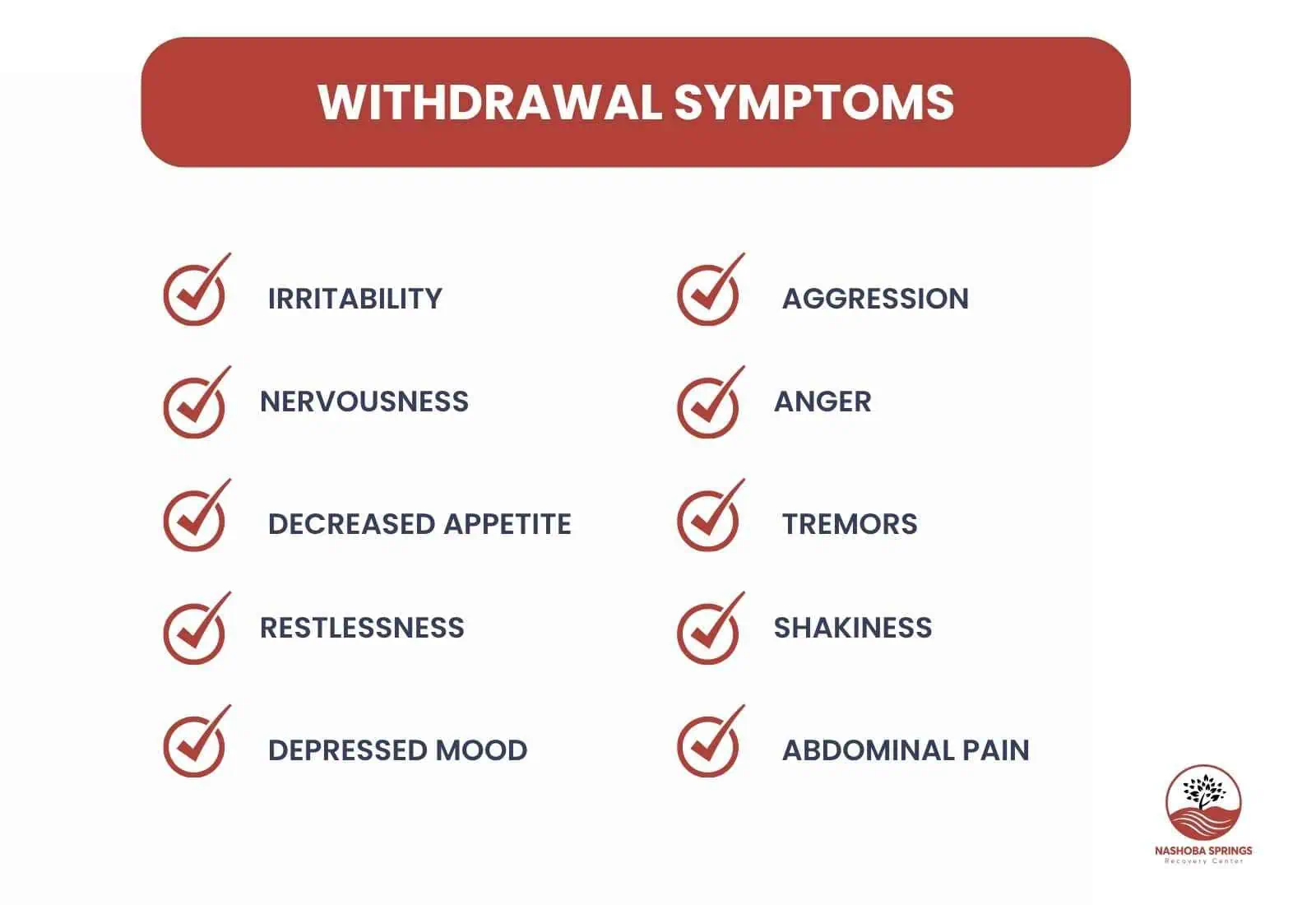
Cannabis withdrawal is a DSM-5-TR diagnosis that requires three or more symptoms within about one week of stopping heavy, prolonged use. Symptoms are mostly emotional and behavioral, with some physical discomfort, and they are usually temporary.
The DSM-5-TR applies this diagnosis after heavy, prolonged use, typically daily or almost daily use over at least a few months (American Psychiatric Association, 2022). The recognized symptoms include:
- Irritability, anger, or aggression
- Nervousness or anxiety
- Sleep difficulty, including insomnia or disturbing dreams
- Decreased appetite or weight loss
- Restlessness
- Depressed mood
- At least one physical symptom causing significant discomfort: abdominal pain, shakiness or tremors, sweating, fever, chills, or headache
Budney et al. (2004) found that most abstinence symptoms began within 48 hours. Withdrawal matters clinically because using cannabis again relieves the symptoms. This makes the first week the period of highest relapse risk.
We Believe In You – No Matter What
We provide every level of care you need for lasting recovery. From detox to aftercare, our team is ready to help you start a new chapter.
Is Quitting Weed Cold Turkey Better Than Tapering?
No cannabis-specific trial shows that quitting weed cold turkey is better than tapering. Abrupt cessation is generally not medically dangerous. Tapering may soften withdrawal for heavy users, since severity tracks the amount used before stopping.
Connor et al. (2022) report that withdrawal duration and severity are associated with the amount of cannabis consumed before stopping. Supportive counseling and education about withdrawal are the first-line approaches. No medication is currently approved specifically for managing cannabis withdrawal.
“The first two weeks without cannabis are usually the hardest, because sleep and mood are still adjusting,” says Jacob Lewis, MLADC. “Clients who plan for cravings, keep a daily structure, and practice relapse prevention skills during that window tend to reach the point where the benefits become real.”
How Common Is Cannabis Use Disorder?
Cannabis use disorder is common, especially in high-use states. NIDA estimates that 22% to 30% of people who use cannabis have cannabis use disorder, and Massachusetts reports past-year marijuana use well above the national average.
According to the SAMHSA 2023-2024 state estimates, 29.83% of Massachusetts residents aged 12 or older used marijuana in the past year. Among Massachusetts young adults aged 18 to 25, past-year use reached 48.73%, compared with 35.75% nationally.
Treatment for Cannabis Use Disorder
Structured support that combines behavioral therapy, relapse prevention, and mental health care helps people stay off weed. Nashoba Springs Recovery Center provides this care at partial hospitalization, intensive outpatient, and outpatient levels in Massachusetts.
Nashoba Springs Recovery Center in Groton provides personalized Marijuana Addiction Treatment through CBT, DBT, SMART Recovery, Dharma Recovery, and relapse prevention programming. The center is a Massachusetts-licensed substance use disorder treatment facility.
The medical director completes a psychiatric assessment within 48 hours of admission. Care begins in the Partial Hospitalization Program which runs Monday through Friday from 9 AM to 3 PM and includes individual therapy at least weekly.
Clients then step down to the Intensive Outpatient Program and on to outpatient care. Because Nashoba holds both substance use and mental health licensing, it also provides Dual Diagnosis Treatment for co-occurring depression, anxiety, PTSD, and eating disorders.
Family therapy and monthly family meetings strengthen support at home. Holistic therapies, including sound bowls, Reiki, breathwork, and yoga, complement clinical care, along with hiking and meditation groups.
Verify Your Insurance Coverage Today
We work with most major insurance providers to make treatment accessible. Check if your plan covers care at Nashoba Springs Recovery.
Frequently Asked Questions About Quitting Weed
Does quitting weed make people happier?
Quitting weed improves mood once withdrawal ends, although irritability and low mood are common in the first week. Depression after quitting weed that lasts beyond a few weeks may signal an underlying condition that needs clinical evaluation.
Does quitting weed lower blood pressure?
Evidence that quitting weed lowers blood pressure long term is limited. A small study of daily cannabis users found that blood pressure rose after abrupt cessation, which suggests a short-term withdrawal effect (Vandrey et al., 2011). People with hypertension should monitor their readings during the first weeks and consult a clinician.
Why are dreams so vivid after quitting weed?
Vivid dreams after quitting weed reflect REM rebound. THC suppresses REM sleep, the stage when most dreaming occurs. Stopping allows REM activity to return, sometimes above baseline levels (Angarita et al., 2016). Dream intensity usually settles as sleep patterns normalize over the following weeks.
When should someone stop using weed during pregnancy?
Stopping cannabis as early as possible, ideally before conception, is the safest choice. The CDC warns that cannabis use during pregnancy may increase the risk of pregnancy complications. Pregnant people who find stopping difficult should tell their prenatal care provider, who can arrange safe support for withdrawal.
References
- American Psychiatric Association. (2022). Diagnostic and statistical manual of mental disorders (5th ed., text rev.). American Psychiatric Publishing.
- Angarita, G. A., Emadi, N., Hodges, S., & Morgan, P. T. (2016). Sleep abnormalities associated with alcohol, cannabis, cocaine, and opiate use: A comprehensive review. Addiction Science & Clinical Practice, 11, 9.
- Bahji, A., Stephenson, C., Tyo, R., Hawken, E. R., & Seitz, D. P. (2020). Prevalence of cannabis withdrawal symptoms among people with regular or dependent use of cannabinoids: A systematic review and meta-analysis. JAMA Network Open, 3(4), e202370.
- Bonnet, U., & Preuss, U. W. (2017). The cannabis withdrawal syndrome: Current insights. Substance Abuse and Rehabilitation, 8, 9-37.
- Budney, A. J., Hughes, J. R., Moore, B. A., & Vandrey, R. (2004). Review of the validity and significance of cannabis withdrawal syndrome. American Journal of Psychiatry, 161(11), 1967-1977.
- Centers for Disease Control and Prevention. (n.d.). Cannabis facts and stats. CDC
- Hancox, R. J., Shin, H. H., Gray, A. R., Poulton, R., & Sears, M. R. (2015). Effects of quitting cannabis on respiratory symptoms. European Respiratory Journal, 46(1), 80-87.
- National Institute on Drug Abuse. (n.d.). Cannabis (marijuana). NIH
- Substance Abuse and Mental Health Services Administration. (2025). Behavioral health barometer, Massachusetts, volume 8: Indicators as measured in the 2021-2023 National Surveys on Drug Use and Health (Publication No. PEP25-07-009). SAMHSA