Marijuana Addiction: What It Is, Symptoms & Treatment
Marijuana addiction is a clinically recognized condition that affects roughly 3 in 10 people who use cannabis regularly. Known formally as cannabis use disorder (CUD), it develops when a person cannot stop using marijuana despite harm to their health, relationships, or daily responsibilities. As THC potency climbs, rates of addiction and dependence are rising across the United States and Massachusetts.
Key Takeaways
- Marijuana addiction, or cannabis use disorder, is diagnosed under the DSM-5 across 11 criteria and rated mild, moderate, or severe.
- About 30% of marijuana users develop CUD, and those who start before age 18 face four to seven times greater risk (NIDA).
- An estimated 132,000 Massachusetts residents meet the criteria for cannabis use disorder, with nearly half of adults aged 18 to 25 reporting past-year use.
- Marijuana withdrawal is real, starting within 24 to 48 hours and typically resolving within one to three weeks.
- Young people with CUD face higher risks of schizophrenia, depression, and anxiety (American Journal of Psychiatry, 2026).
- No FDA-approved medication exists for CUD. Treatment relies on behavioral therapy, mainly CBT, through PHP, IOP, and OP.
What Is Marijuana Addiction?
Marijuana addiction refers to the inability to stop using cannabis despite clear negative consequences. The American Psychiatric Association classifies this as cannabis use disorder in the DSM-5. CUD reflects real changes in brain chemistry caused by regular THC exposure, not a lack of willpower.
THC activates the brain’s reward system by triggering a surge of dopamine. Over time, the brain adapts and begins to depend on THC to function normally. This builds tolerance, meaning a person needs increasingly larger amounts to achieve the same effects. Cannabis use disorder exists on a clinical spectrum ranging from mild to severe, which clinicians recognize as drug addiction in its fullest sense.
We Believe In You – No Matter What
We provide every level of care you need for lasting recovery. From detox to aftercare, our team is ready to help you start a new chapter.
How Common Is Marijuana Addiction?
The 2023 National Survey on Drug Use and Health found that approximately 61.8 million Americans aged 12 and older used marijuana in the past year, with 19.2 million meeting the diagnostic criteria for marijuana use disorder.
The burden is especially significant in Massachusetts. SAMHSA state-level data estimates that 132,000 Massachusetts residents meet the clinical criteria for cannabis use disorder. Among adults aged 18 to 25 in the state, 46.2% reported past-year cannabis use, representing approximately 365,000 young adults in the highest-risk demographic. Youth aged 12 to 17 in Massachusetts used marijuana at roughly double the national average, 12.2% compared to 6.8% nationally. Since recreational cannabis was legalized in 2016, more than 400 licensed retail establishments now operate across the Commonwealth, expanding access to high-potency products that have coincided with rising disorder rates.
What are the Symptoms of Marijuana Addiction?
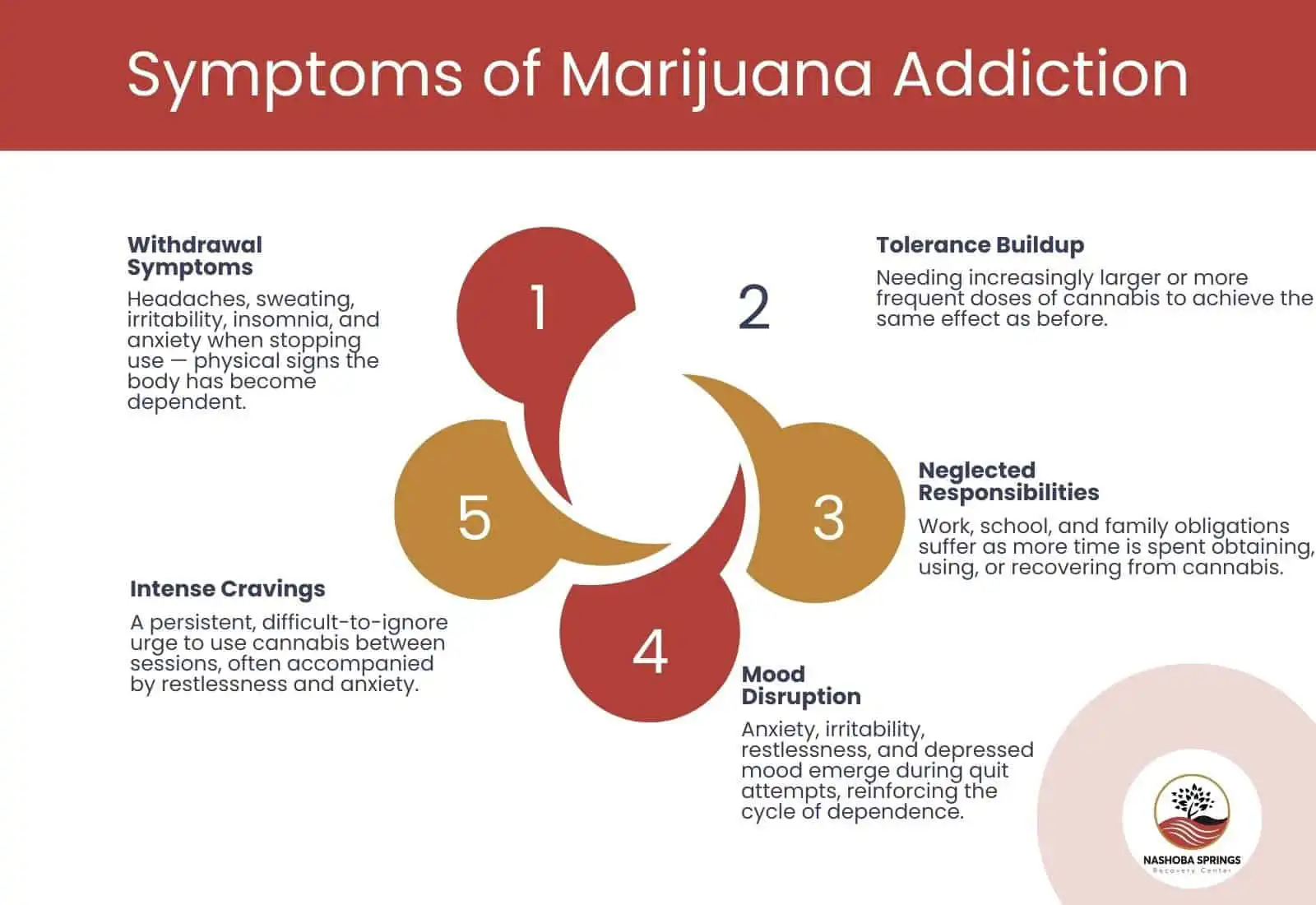
The symptoms of marijuana addiction include physical, psychological, and behavioral signs. These may involve cravings, mood changes, and difficulty controlling use despite negative consequences.
Physical Symptoms of Marijuana Addiction
- Tolerance: Needing larger or more frequent doses to achieve the same effect as before
- Bloodshot eyes: Persistent redness caused by THC dilating blood vessels in the eye
- Chronic cough: Especially common in those who smoke or vape cannabis regularly
- Appetite changes: Increased hunger during use, reduced appetite when abstaining
- Fatigue: Lingering tiredness even after adequate rest
- Physical withdrawal: Headaches, stomach pain, sweating, chills, and tremors when stopping abruptly
Psychological and Behavioral Symptoms of Marijuana Addiction
- Intense cravings: A persistent, difficult-to-ignore urge to use cannabis between sessions
- Mood disruption: Anxiety, irritability, restlessness, and depressed mood during quit attempts
- Cognitive decline: Gradual drops in motivation, memory, and concentration after weeks of heavy use
- Psychosis risk: Elevated risk of psychotic episodes in individuals with a genetic predisposition
- Neglected responsibilities: Increasing time spent obtaining or recovering from cannabis at the expense of work, school, or family
- Social withdrawal: Abandoning valued hobbies and pulling away from close relationships
- Loss of control: Continued use despite financial strain, legal consequences, or relationship conflict
Verify Your Insurance Coverage Today
We work with most major insurance providers to make treatment accessible. Check if your plan covers care at Nashoba Springs Recovery.





What are the Causes and Risk Factors of Marijuana Addiction?
The causes of marijuana addiction include genetic vulnerability, biological timing, and increased access through legal markets, all of which can increase the risk of developing dependence.
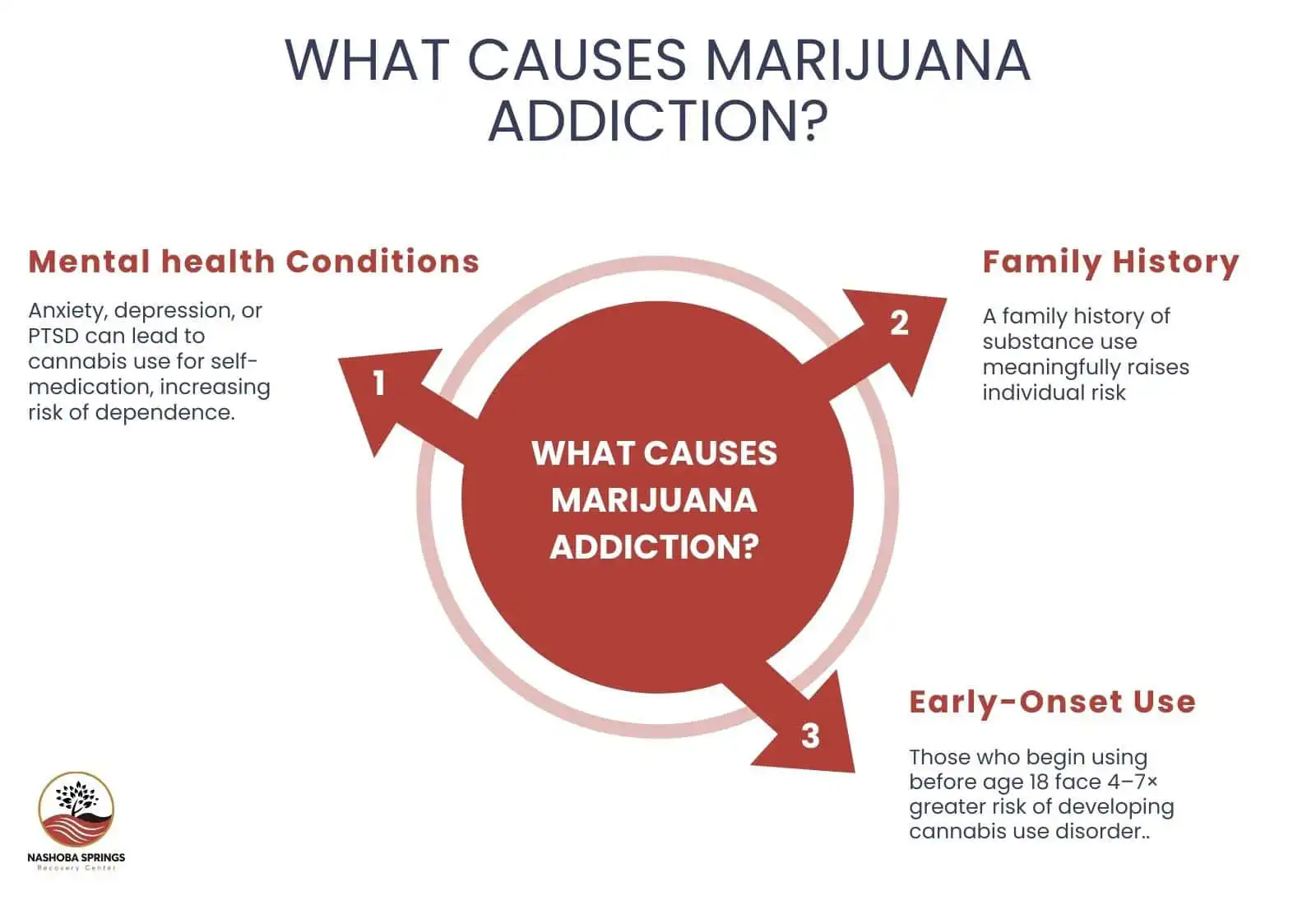
Below are the causes and risk factors of marijuana addiction:
- Brain development window: The brain continues developing until approximately age 25. Regular THC exposure during this period can alter neural pathways governing memory, impulse control, and emotional regulation.
- High-potency product exposure: Massachusetts dispensaries stock products with THC concentrations of 30 to 40%, compared to a national average of roughly 9% in 2008. Young adults entering the legal market often have no reference point for how potent these products are.
- Legal access at scale: More than 400 licensed retailers now operate across the Commonwealth. Wider availability lowers behavioral barriers to daily use, particularly among the 18 to 25 age group that already represents the state’s highest-use demographic.
- Family history: Hereditary influences account for 40% to 60% of a person’s vulnerability to substance use disorders, including CUD. A family history of substance use meaningfully raises individual risk.
- Mental health conditions: People living with anxiety, depression, or PTSD may turn to cannabis to self-medicate. This pattern can escalate quickly into dependence as the brain begins relying on THC for emotional regulation.
- Bidirectional psychiatric relationships: A 2024 Yale School of Medicine study confirmed that cannabis use disorder worsens conditions like depression, anxiety, and PTSD while those same conditions simultaneously increase the likelihood of problematic use, creating a reinforcing cycle.
What Are The Effects of Marijuana Addiction?
The short-term and lont-term effects of marijuana addiction vary based on the amount consumed, THC potency, consumption method, and individual biology. The table below outlines the key differences between immediate and cumulative consequences of regular cannabis use.
| Short-Term Effects | Long-Term Effects |
|---|---|
| Euphoria or altered mood | Chronic bronchitis and respiratory problems |
| Impaired coordination and reaction time | Impaired memory and cognitive function |
| Increased heart rate | Elevated psychosis or schizophrenia risk |
| Anxiety or paranoia at high doses | Cannabis hyperemesis syndrome |
| Short-term memory disruption | Reduced motivation and declining performance |
| Dry mouth and bloodshot eyes | Tolerance, dependence, and cannabis use disorder |
We Believe In You – No Matter What
We provide every level of care you need for lasting recovery. From detox to aftercare, our team is ready to help you start a new chapter.
What is The Timeline For Marijuana Withdrawal Symptoms?
The timeline for marijuana withdrawal symptoms begins within 24 to 48 hours after the last use and typically peaks between days two and six. Most symptoms resolve within one to three weeks. Sleep disturbances and intermittent cravings may persist for four weeks or longer in heavy daily users. Common symptoms include:
- Irritability, anger, or aggression
- Anxiety and nervousness
- Insomnia or vivid dreams
- Decreased appetite or weight loss
- Restlessness and depressed mood
- Physical discomfort such as headaches, sweating, and chills
How Is Marijuana Addiction Diagnosed?
The DSM-5 requires that a person meet at least two of 11 criteria within a 12-month period for a diagnosis of cannabis use disorder. Key criteria include using more than intended, failed attempts to cut back, intense cravings, neglecting responsibilities, continued use despite relationship or health problems, tolerance, and withdrawal symptoms. Severity is classified as mild (2 to 3), moderate (4 to 5), or severe (6 or more). A licensed clinician should conduct this assessment through a comprehensive clinical evaluation.
Verify Your Insurance Coverage Today
We work with most major insurance providers to make treatment accessible. Check if your plan covers care at Nashoba Springs Recovery.
What Are The Treatment Options for Marijuana Addiction?
The treatment options for marijuana addiction relies primarily on behavioral therapies delivered through structured outpatient settings, including cognitive behavioral therapy, motivational enhancement therapy, and contingency management. The right combination of approach and intensity depends on the severity of each person’s condition.
- Partial hospitalization program (PHP): Structured daily treatment with the flexibility of returning home each evening. Best suited for those needing high-intensity support without residential care.
- Intensive outpatient program (IOP): Several hours of therapy weekly, designed for those balancing treatment with work or family obligations.
- Outpatient program (OP): Continued therapeutic support on a lighter weekly schedule. Best suited for individuals stepping down from a higher level of care.
- Medication-assisted treatment (MAT): Used where co-occurring substance use or mental health conditions require pharmacological support alongside therapy.
- Aftercare planning: Structured support following primary treatment to maintain progress, build healthy routines, and reduce long-term relapse risk.
Marijuana Addiction and Co-Occurring Mental Health Disorders
Cannabis use disorder rarely exists alone. A 2026 study in the American Journal of Psychiatry found that young people with CUD face 52% higher risk for schizophrenia, 30% higher risk for recurrent major depression, and 21% higher risk for anxiety disorders. The relationship runs both ways: marijuana worsens mental health symptoms while mental health conditions drive increased cannabis use. Dual diagnosis treatment addresses both conditions simultaneously, which research consistently shows produces better outcomes than treating each in isolation.
Can using medical marijuana lead to cannabis use disorder?
Yes. The DSM-5 does not differentiate between recreational and medical cannabis when applying diagnostic criteria. Tolerance, withdrawal, and compulsive use can develop regardless of the reason for use. Patients using high-THC medical products daily for chronic pain, anxiety, or sleep are at meaningful risk of developing dependence over time.
Are there any FDA-approved medications to treat marijuana addiction?
No medication has received FDA approval specifically for cannabis use disorder. Researchers have studied gabapentin, N-acetylcysteine, CBD-based compounds, and synthetic THC analogs, but results across clinical trials have been inconsistent. Current evidence-based treatment relies primarily on behavioral therapies delivered through intensive outpatient programs including cognitive behavioral therapy, motivational enhancement therapy, and contingency management.
Can you develop marijuana addiction from edibles?
Yes. The DSM-5 criteria for cannabis use disorder apply regardless of how marijuana is consumed. Edibles carry a specific risk due to their delayed onset of 30 minutes to 2 hours, which often leads to re-dosing before the first amount takes full effect. High-potency dispensary edibles can contain 10 to 100 milligrams of THC per serving. Regular overconsumption at these concentrations builds tolerance and dependence quickly, meeting clinical criteria for addiction.
We Believe In You – No Matter What
We provide every level of care you need for lasting recovery. From detox to aftercare, our team is ready to help you start a new chapter.
When to Seek Help for Marijuana Addiction?
If marijuana use is interfering with work, relationships, health, or emotional stability, a clinical evaluation is warranted. Warning signs include repeated failed quit attempts, withdrawal discomfort when not using, neglected responsibilities, and using cannabis to manage stress or emotional pain. Nashoba Springs Recovery Center provides structured marijuana addiction treatment through outpatient programs at every level of care. To take the first step, speak with our admissions team for a confidential consultation.
References
- Substance Abuse and Mental Health Services Administration. (2024). 2023 National Survey on Drug Use and Health: Main highlights. >
- National Institute on Drug Abuse. (2024). Cannabis (marijuana): Is it addictive? >
- Centers for Disease Control and Prevention. (2024). Understanding your risk for cannabis use disorder. >