Alcohol Addiction: Signs, Causes, Diagnosis & Treatment
Alcohol addiction is a medical condition defined by an impaired ability to stop or control drinking despite harm. The National Institute on Alcohol Abuse and Alcoholism classifies alcohol use disorder as a brain disorder. Repeated heavy drinking alters the circuits governing reward, stress, and self-control.
Clinicians diagnose it against eleven behavioral criteria rather than a drink count. Severity ranges across a spectrum. Two or three criteria indicate a mild disorder. Six or more indicate a severe one. Most diagnosed cases never match the stereotype of daily morning drinking.
Key Highlights
- 27.9 million people aged 12 and older in the United States, or 9.7 percent, had alcohol use disorder in the past year, per the 2024 National Survey on Drug Use and Health.
- Only 7.6 percent of people with past-year alcohol use disorder received any alcohol-related treatment, leaving more than nine in ten without care.
- Severity follows symptom count: 2 to 3 criteria is mild, 4 to 5 is moderate, 6 or more is severe.
- Heritability accounts for approximately 60 percent of risk, per NIAAA.
What is alcohol addiction?
Alcohol use disorder is a medical condition characterized by an impaired ability to stop or control alcohol use despite adverse social, occupational, or health consequences. The NIAAA definition of alcohol use disorder centers on control, not quantity consumed.
Alcohol is classified as a central nervous system depressant. Ethanol, the intoxicating compound in beer, wine, and spirits, produces sedation by suppressing neural activity.
How common is alcohol addiction?
Alcohol addiction affected 27.9 million people aged 12 and older in the United States, or 9.7 percent, in the past year. An estimated 777,000 Massachusetts residents aged 12 and older had alcohol use disorder in the past year, per SAMHSA state estimates averaged across the 2022 and 2023 surveys. The Massachusetts rate of 12.80 percent exceeds the national figure of 9.7 percent.
Why is alcohol so addictive?
Alcohol enhances GABA, the brain’s primary inhibitory neurotransmitter, and suppresses glutamate, the primary excitatory neurotransmitter. The combination produces sedation and disinhibition.
Alcohol also triggers dopamine release in the mesolimbic reward pathway, marking drinking as an experience worth repeating. Repetition strengthens that association until environmental cues alone trigger craving.
NIAAA describes a three-stage cycle of alcohol addiction: binge and intoxication, withdrawal and negative affect, then preoccupation and anticipation. Each stage recruits a distinct brain region, respectively the basal ganglia, the extended amygdala, and the prefrontal cortex.
The functional shift is decisive. Drinking that began for pleasure continues to relieve the discomfort of not drinking, a mechanism termed negative reinforcement. That mechanism establishes alcohol use disorder as a chronic disease.
We Believe In You – No Matter What
We provide every level of care you need for lasting recovery. From detox to aftercare, our team is ready to help you start a new chapter.
What are the signs and symptoms of alcohol addiction?
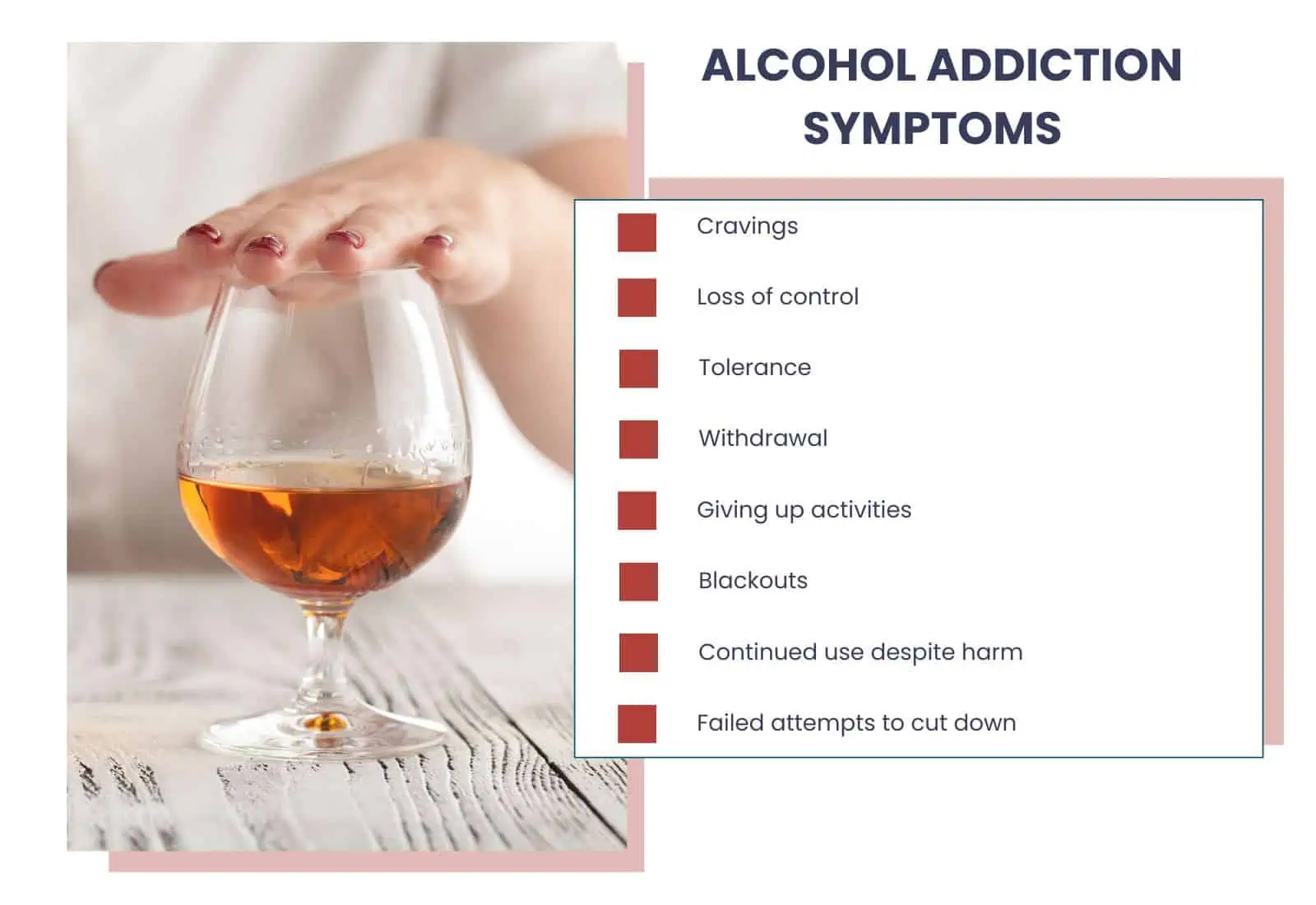
The signs and symptoms of alcohol addiction include cravings, preoccupation with the next drink, guilt about consumption, and inability to stop once drinking begins. These are internal states the person reports rather than behaviors others witness.
Behavioral signs include drinking alone or in secret, concealing bottles, minimizing intake when questioned, and structuring social plans around alcohol availability. Each represents a reordering of priorities.
Physical signs include escalating tolerance, morning tremor or nausea, disrupted sleep, and elevated liver enzymes such as GGT on routine bloodwork. Laboratory findings frequently precede any disclosure.
Interpersonal signs include repeated conflict about drinking, missed commitments, declining work performance, and withdrawal from established hobbies. These signs of alcohol addiction correspond directly to the social impairment criteria.
The symptoms of alcohol addiction include:
- Cravings. A strong urge or persistent preoccupation with the next drink.
- Loss of control. Consuming more alcohol, or drinking longer, than intended.
- Failed attempts to cut down. Repeated resolutions to moderate that do not hold.
- Tolerance. Requiring measurably more alcohol to reach the familiar effect.
- Neglected responsibilities. Work, school, or family obligations slipping because of drinking or recovery time.
What are the causes of alcohol addiction?
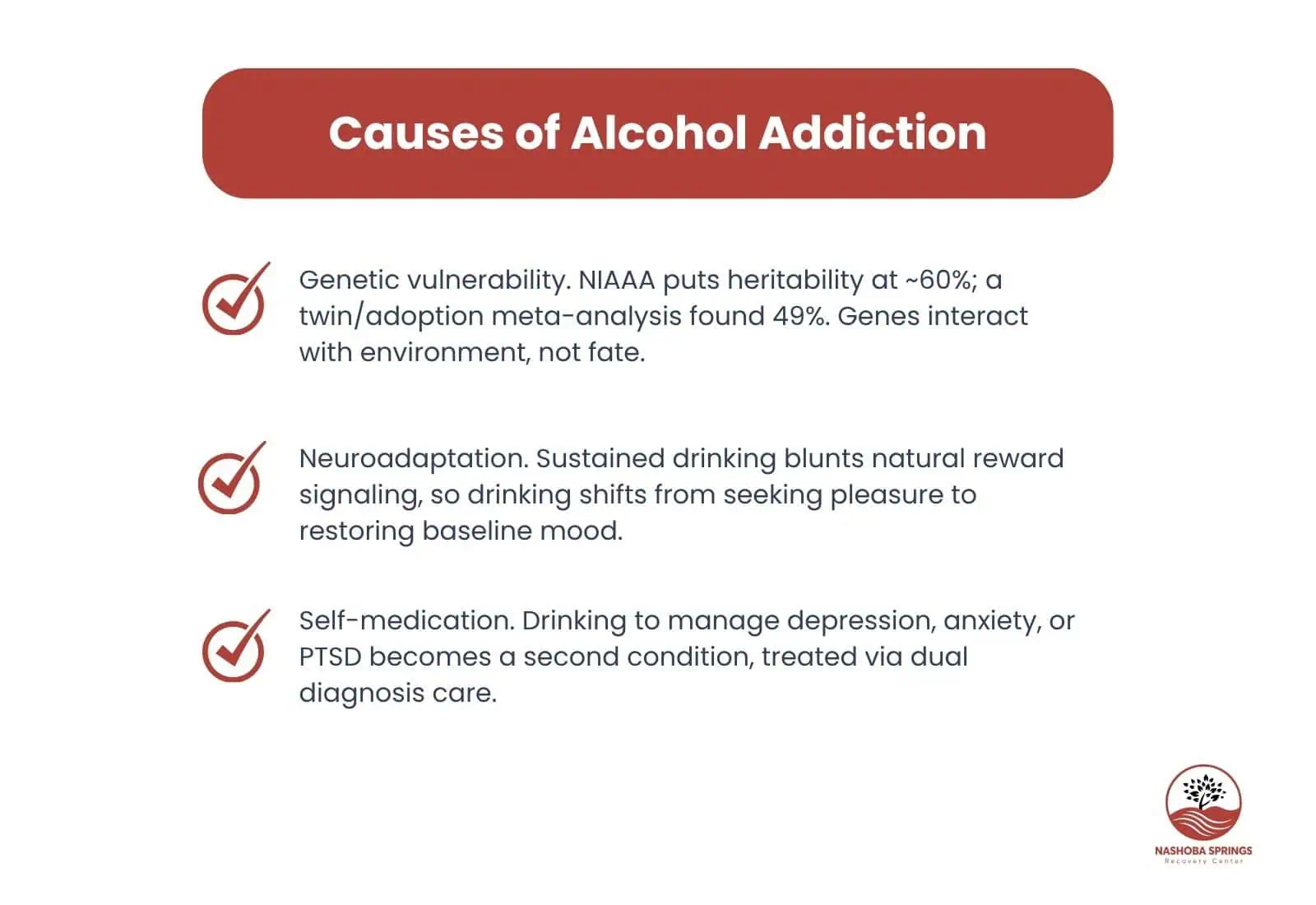
Alcohol addiction develops through repeated heavy drinking that produces lasting neuroadaptation in the brain’s reward, stress, and executive control circuits. No single cause acts alone. Genetic vulnerability, neurochemical change, and psychological drivers combine.
- Genetic vulnerability. NIAAA attributes approximately 60 percent of risk to heritability, with genes interacting with environment rather than dictating outcomes. A meta-analysis of twin and adoption studies placed heritability at 49 percent.
- Neuroadaptation. Sustained drinking downregulates the brain’s natural reward signaling. Baseline mood drops without alcohol, and drinking continues to restore normal function rather than to produce pleasure.
- Self-medication of psychiatric symptoms. Drinking that begins as symptom management for depression, anxiety, or PTSD becomes a second condition, which is why dual diagnosis care treats both simultaneously.
- Stress-system dysregulation. Early adversity alters cortisol response and amygdala reactivity, establishing alcohol as an effective short-term regulator of physiological distress.
What are the risk factors for alcohol addiction?
Risk factors of alcohol addiction include age, family history and sex. Females who began drinking before 15 carry higher risk than males in the same group, per NIAAA. Females also reach equivalent blood alcohol concentration on fewer drinks. NIAAA identifies age of first drink, family history, co-occurring psychiatric conditions, and sustained drinking patterns as the strongest predictors.
| Risk factor | Effect on risk |
|---|---|
| Drinking before age 15 | Adults 26 and older who began drinking before 15 report past-year alcohol use disorder at substantially higher rates than those who waited until 21 or later |
| Family history | Multigenerational history characterizes the intermediate familial subtype, which accounts for 19 percent of cases |
| Co-occurring psychiatric conditions | Depression, anxiety, post-traumatic stress disorder, and ADHD each elevate risk |
| Adverse childhood experiences | Early trauma increases vulnerability to alcohol as an emotional regulator |
| Heavy or binge drinking patterns | 15 or more weekly drinks for men, or 8 or more for women, raises progression probability |
| Environment | Household norms, peer expectations, and availability shape consumption trajectory |
Verify Your Insurance Coverage Today
We work with most major insurance providers to make treatment accessible. Check if your plan covers care at Nashoba Springs Recovery.




Is alcohol withdrawal life-threatening?
Yes, alcohol withdrawal can become life-threatening. Withdrawal seizures occur 6 to 48 hours after the last drink. Delirium tremens, the most severe form, emerges 48 to 96 hours afterward and constitutes a medical emergency.
Anyone drinking heavily for a prolonged period requires medical guidance before stopping. A physician assesses risk and determines whether monitored withdrawal precedes outpatient care.
How is alcohol addiction diagnosed?
Alcohol addiction is diagnosed against the DSM-5-TR criteria, requiring a problematic pattern of alcohol use causing clinically significant impairment or distress, evidenced by at least 2 of 11 criteria within a 12-month period.
Diagnosis follows a structured clinical interview, not a laboratory test. No blood panel or imaging study confirms alcohol use disorder. Neither tolerance nor withdrawal is required for diagnosis. Alcohol use disorder criteria can be satisfied entirely through behavioral items. The eleven criteria divide across four domains.
| Domain | Criteria included |
|---|---|
| Impaired control | Drinking more or longer than intended; unsuccessful efforts to cut down; excessive time obtaining, using, or recovering; cravings |
| Social impairment | Failing role obligations at work, school, or home; continued use despite relationship problems; giving up important activities |
| Risky use | Repeated use in physically hazardous situations; continued use despite a known physical or psychological problem |
| Pharmacological | Tolerance requiring more alcohol for the same effect; withdrawal symptoms when drinking stops |
Symptom count determines severity directly.
| Severity | Criteria met | Typical presentation |
|---|---|---|
| Mild | 2 to 3 | Drinking beyond intended limits, failed attempts to cut back, cravings; withdrawal usually absent |
| Moderate | 4 to 5 | Role obligations slipping, activities abandoned, tolerance building |
| Severe | 6 or more | Withdrawal symptoms, hazardous use, continued drinking despite documented harm |
We Believe In You – No Matter What
We provide every level of care you need for lasting recovery. From detox to aftercare, our team is ready to help you start a new chapter.
Treatment for alcohol addiction
Treatment begins with a clinical assessment establishing severity and matching the person to a level of structure. Nashoba Springs Recovery Center provides outpatient behavioral health care in Groton, Massachusetts, holding The Joint Commission Gold Seal of Approval.
The facility does not provide on-site detoxification. Clients requiring medically monitored withdrawal are coordinated with an appropriate provider before outpatient programming begins.
The partial hospitalization program delivers full-day structure across 30 to 45 days. The intensive outpatient program runs morning, afternoon, or evening tracks for people maintaining employment and family obligations.
Clients whose clinicians recommend pharmacological support access medication-assisted treatment, which makes the three FDA-approved options available. Naltrexone, acamprosate, and disulfiram are non-addictive and function alongside therapy rather than replacing it.
References
- American Psychiatric Association. (2022). Diagnostic and statistical manual of mental disorders (5th ed., text rev.).
- Centers for Disease Control and Prevention. (2024). Facts about U.S. deaths from excessive alcohol use. CDC
- Moss, H. B., Chen, C. M., & Yi, H. Y. (2007). Subtypes of alcohol dependence in a nationally representative sample. Drug and Alcohol Dependence, 91(2-3), 149-158.
- National Institute on Alcohol Abuse and Alcoholism. (2025). Understanding alcohol use disorder. NIH
- National Institute on Alcohol Abuse and Alcoholism. (2025). Alcohol use disorder (AUD) in the United States: Age groups and demographic characteristics.
- Verhulst, B., Neale, M. C., & Kendler, K. S. (2015). The heritability of alcohol use disorders: A meta-analysis of twin and adoption studies. Psychological Medicine, 45(5), 1061-1072.